Strategy and Tactics
Strategy and tactics are often confused with each other. To help you differentiate between the two, I’ll use a simple analogy that you can easily remember and doesn’t rely on technical jargon.
What is a strategy?
A strategy is the long-term path or approach that an organization takes to achieve its goals. Please note the most important that it’s not the goal itself, nor is it a list of features or a roadmap.
What is a tactic?
On the other hand, a tactic is a concrete step that an organization takes to achieve smaller goals within a shorter time frame. A good tactic is purposeful and supports the overall strategy.
The difference?
Let’s use the analogy of climbing a mountain to understand the difference.
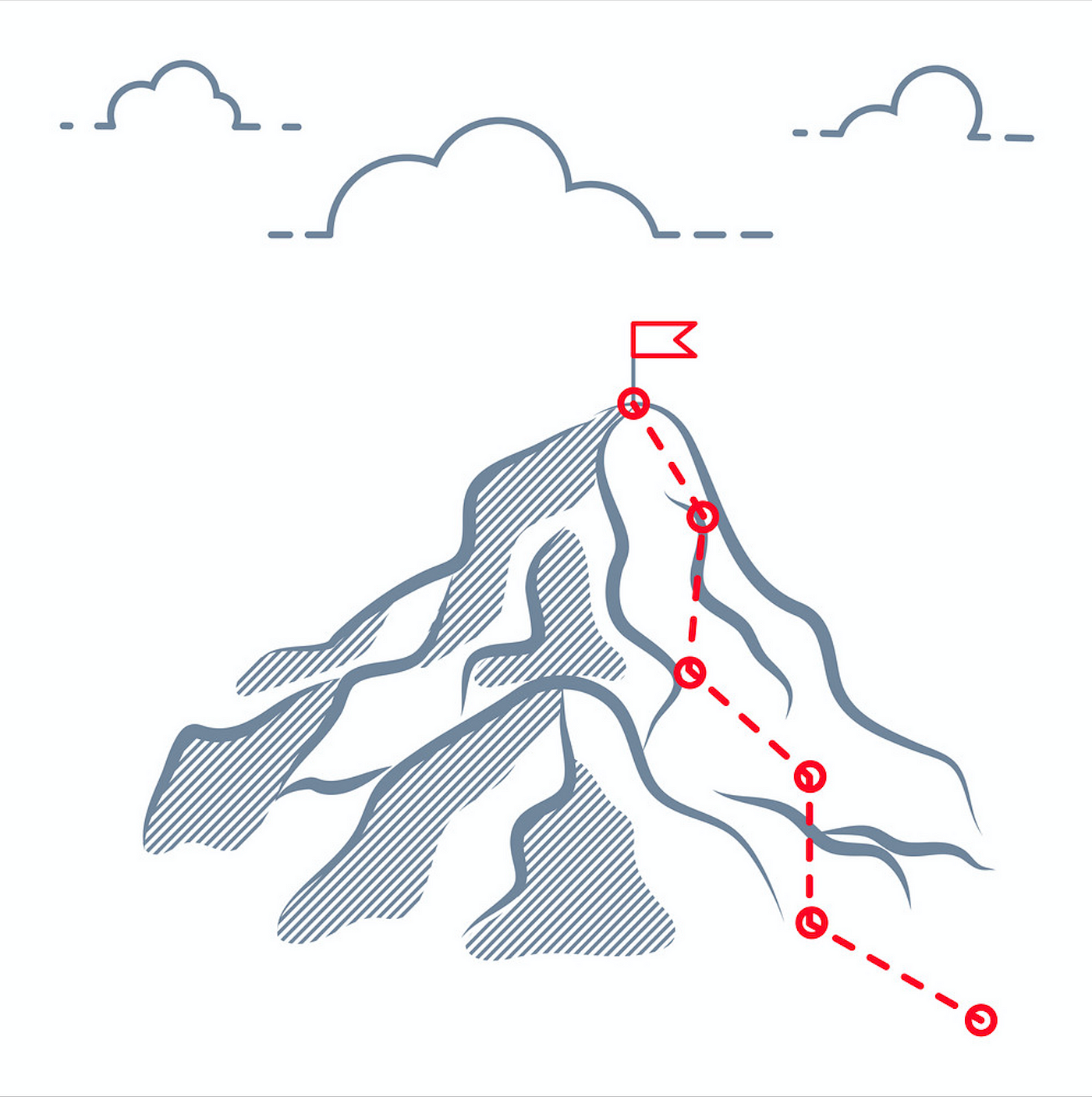
Strategy is akin to defining the side of the mountain one should climb
Imagine your goal is to climb a mountain, then your strategy would be — What side of the mountain will you climb —let’s call it “The Chosen Side (TCS).”
Tactics are the specific steps you take to climb along TCS, such as
- What gear to buy?
- What is the right season to climb?
- Who do you climb with?
If your strategy changes i.e if you choose a different side of the mountain to climb, your tactics will also need to change accordingly.
Your strategy to climb TCS will inform your tactics. Tactics will change if your strategy changes i.e if you choose a different side than TCS to climb, you might want to get some additional gear like ladders and ice screws if there is a treacherous crevasse (remember the Khumbu Icefall along Mt. Everest if you’ve seen the movie?) to climb along TCS. You might also want to take a Sherpa who is more experienced at climbing along TCS as compared to a lesser experienced Sherpa.
What are the characteristics of a good strategy?
Not exhustively but a good strategy has the following 3 main attributes:
- 🎯 Targeted: A good strategy heavily focuses on allocating resources to prepare for climbing along TCS. You will likely need to invest in additional equipment in case you need to take a detour if you discover a blocker along TCS to hedge your risk. Give limited resources, as is the case in real life and with all organizations, a bad strategy would be buy resources to prepare climbing along two other sides of the mountain, which would compromise the quality of your equipment and increase the risk of failure.
- 🔮 Forward-looking: A good strategy looks into the future and identifies potential limitations and constraints. A great strategy also has a plan to address these future challenges, such as planning for a thunderstorm during the climb.
- 📈 Compounds: A bad strategy prioritizes isolated wins while a great strategy doubles down on things that can get you compounded results. A compounding effect in the context of a mountain climb would be that TCS aligns with your personal strengths i.e you are adept at handling obstacles along it rather than another side that has newer obstacles that you haven’t handled before. This would ensure you reach the top safely and much earlier.
- 🥅 Evolves: Lastly, a good strategy that evolves over time ensures you keep hitting your goals because unlike a mountain climb with a fixed goal, an organization will perpetually need to revisit its goals to reach and stay at the top.