The Mom Test
How to talk to users?
Takeaways:
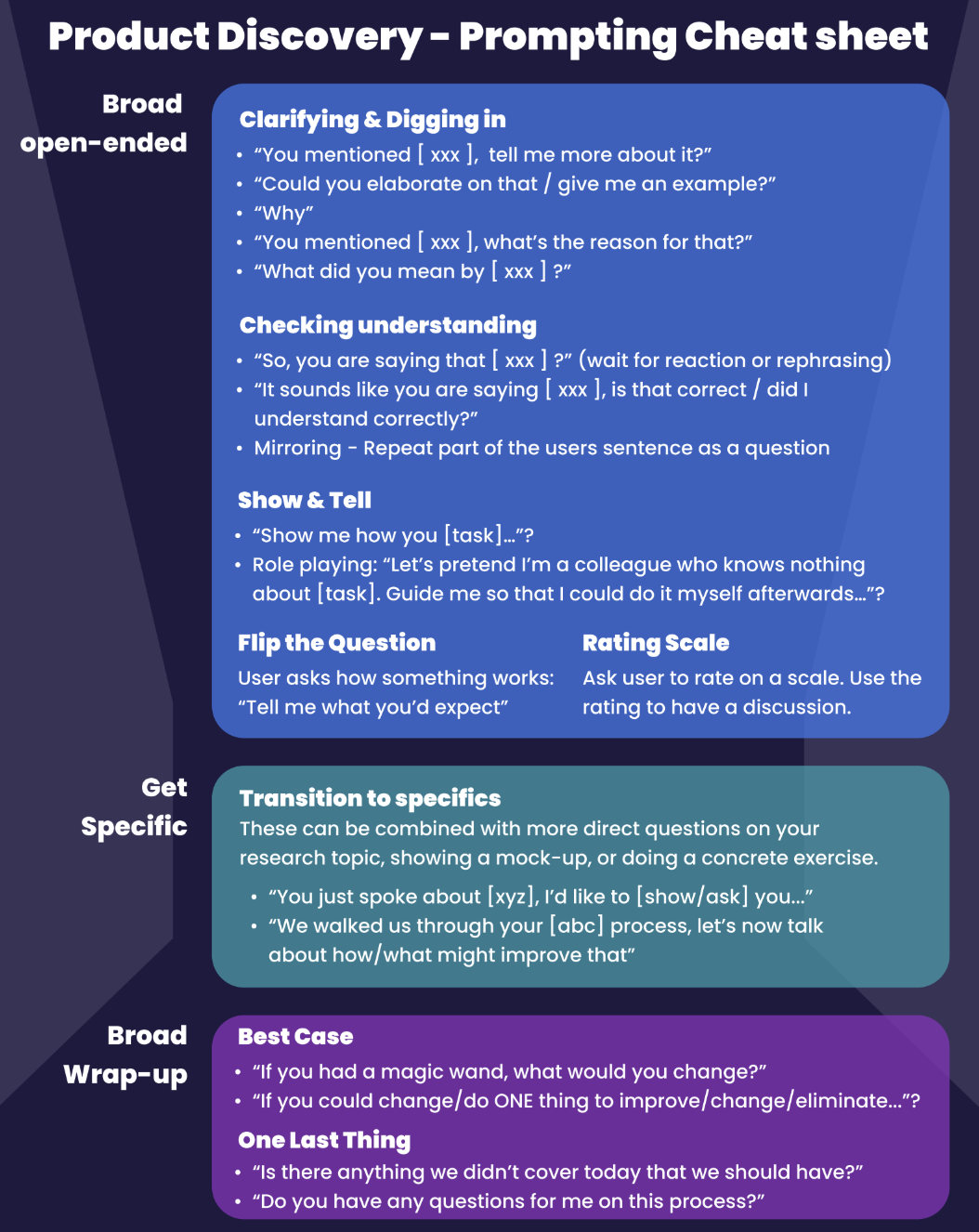
- Don’t sell your idea to the user but gather information from them using their past experience when they faced the problem.
- Customer don’t buy the “what”, they buy the “why”.
Some questions to ask:
-
What is the hardest part about doing the thing that you’re trying to solve?
Start of an open ended conversation
-
Tell me about the last time that you encountered this problem?
Specifics of the context in which they are. Use this to think about product features and positioning
-
Why was this hard?
Helps to identify the real problem. This is the real - “why”. Potentially your marketing proposition to the customer.
-
What, if anything, have you done to try to solve this problem?
Indicates that this is a real problem that they are investing time solving it
-
[Tactical] What don’t you love about the solutions that you’ve already tried?
- This is the beginning of your feature set.
| Principle | Description | Example |
|---|---|---|
| Avoid Pitching | Refrain from directly pitching your idea to potential customers. Instead, focus on understanding their needs. | Instead of saying, “I have a great product idea. Would you buy it?”, ask, “Tell me about the biggest challenge you face in XYZ area.” |
| Talk About Their Lives | Engage customers in conversations about their experiences, challenges, and goals. | Ask questions like, “Can you walk me through a recent situation where you encountered this problem?” |
| Ask About Past Behavior | Inquire about their past experiences and decisions related to the problem you’re addressing. | Ask questions such as, “Can you describe a time when you tried solving this problem? What approach did you take?” |
| Listen for Specifics | Encourage customers to provide specific details and examples. | Prompt them to share specific instances, like “Could you give me an example of when this problem caused a significant issue?” |
| Focus on Actionable Insights | Strive to uncover insights that guide decision-making and product development. | Look for insights such as “I tried using XYZ solution, but it didn’t solve the problem effectively.” |
| Validate Scalable Problems | Ensure the problem you’re addressing is widespread and impacts a larger target audience. | Validate if multiple customers in the same industry or market segment face a similar challenge. |
| Iterate and Learn | Treat conversations as learning opportunities and iterate based on the feedback received. | Actively take note of customer feedback and make adjustments to your product or approach accordingly. |
Relevant Links
An amazing explainer on how this founder applies these principles practically